

Prefabricated Steel Building FAQs
Here we’ve compiled answers to some of the most common questions about prefabricated steel buildings, covering pricing, design, installation, shipping, panels, and customization. If you don’t see your question here, feel free to contact our team directly.
On This Page
General Questions
What is a prefabricated steel building?
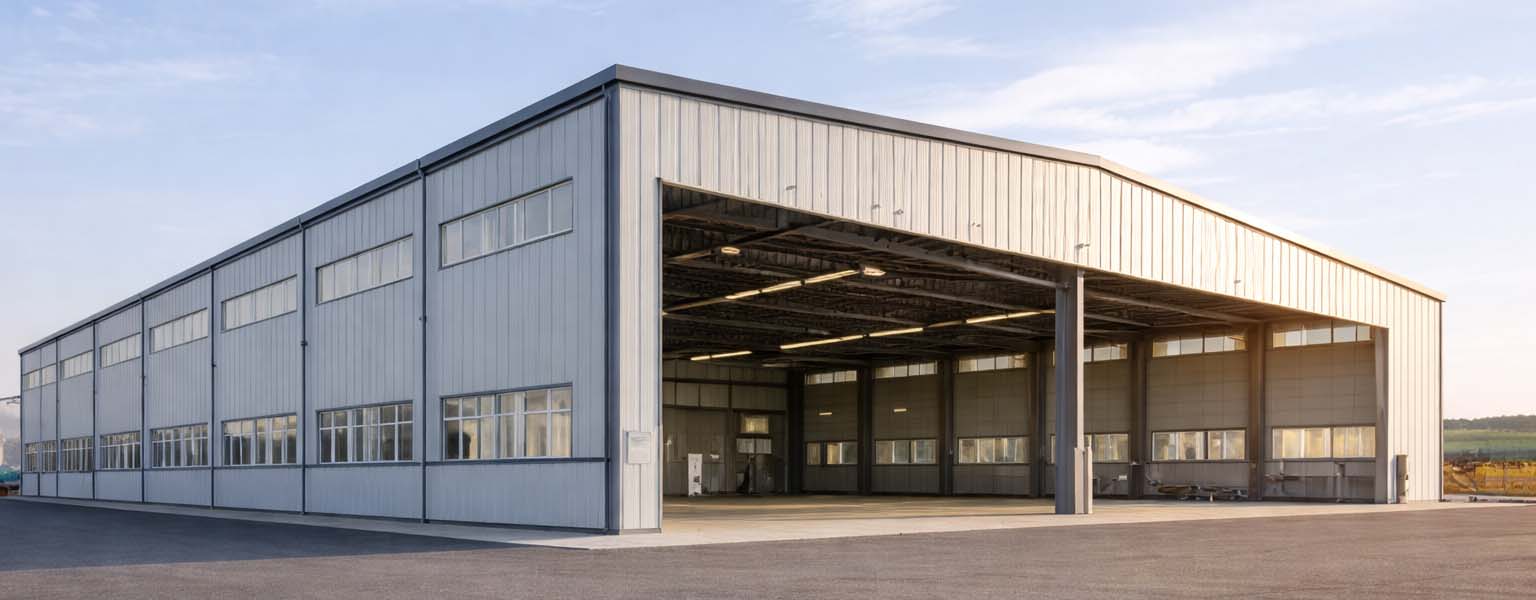
A prefabricated steel building is a structure made from pre-engineered steel components that are fabricated in the factory and then delivered to the project site for assembly. These buildings are widely used for warehouses, workshops, garages, hangars, livestock sheds, and commercial spaces because they offer fast construction, flexible layouts, and durable structural performance.
What information is needed before quotation?
For an accurate quotation, it is helpful to provide the building length, width, height, project location, intended use, roof and wall panel requirements, door and window layout, and any special needs such as cranes, mezzanines, or ventilation. The clearer the project information is, the faster and more accurate the first proposal will be.
How long does production usually take?
Production time depends on project size, design complexity, and current factory schedule. For standard projects, production often takes several weeks after drawings and deposit are confirmed. Larger or more customized buildings may require more time. Shipping time also depends on the destination country and port arrangement.
What affects the final price?
The final price is influenced by several factors, including building size, span, height, bay spacing, wind load, snow load, roof and wall panel type, door quantity, window layout, crane requirements, and shipping destination. Two buildings with the same footprint can have very different prices if the design conditions and specifications are different.
Design & Engineering
How do span and bay spacing affect the design?
Span affects how much open internal space the building has and how heavy the main steel frame needs to be. A wider clear span usually requires stronger main frames. Bay spacing affects the frame layout along the building length and can influence structural efficiency, cladding support, and door or opening arrangement. Both should be selected based on the actual use of the building.
How is eave height selected?
Eave height should be based on internal use, not only on appearance. For storage buildings, it often depends on rack height, forklift clearance, and ventilation space. For workshops, it may also need to consider machinery, maintenance space, or possible crane use. A practical design should leave enough internal clearance for current use and future flexibility.
Why do wind load and snow load matter?
Wind load and snow load are major structural design inputs. They affect the main frame, purlins, girts, bracing, and cladding fixing requirements. A building in a high-wind area or heavy-snow region will usually require a stronger structure than the same building in a mild climate. These loads should always be based on the project location and applicable design requirements.
Can you design for local code requirements?
Yes, project design can be developed according to the required design criteria provided for the job. In international projects, clients often share the project location, local design code, or required load data so the engineering team can prepare the structure accordingly. Final approval requirements should still be checked against local regulations and the responsible project engineer where needed.
Installation & Shipping
How are steel buildings packed and shipped?
Steel structure components are usually packed according to size, weight, and loading efficiency. Main steel members, secondary framing, panels, bolts, and accessories are grouped separately for easier handling and site organization. Export packing normally considers sea transportation, unloading sequence, and protection during shipment.
What is included in the installation scope?
This depends on the project agreement. In many export projects, the supply scope includes steel structure components, roof and wall panels, bolts, trims, and drawings for installation reference. Civil works, local installation labor, cranes, or lifting equipment are often arranged by the client unless otherwise agreed in the contract.
Can local teams install the building?
Yes. Many prefabricated steel buildings are installed by local construction teams using the supplied drawings and installation documents. For smoother erection, it is important that the local team has experience with steel structure assembly, anchor bolt checking, frame alignment, and panel installation.
What should be checked before erection?
Before installation starts, the foundation level, anchor bolt position, base plate match, and site access should be checked carefully. It is also important to confirm that all steel members, bolts, panels, and accessories have arrived and are sorted clearly. Early checking helps avoid delays and rework during erection.
Panels & Options
What wall and roof panels can be used?
Common options include single steel sheets and insulated sandwich panels such as EPS, PU, PIR, and rock wool panels. The right choice depends on the building use, climate, thermal requirements, fire expectations, and budget. Roof and wall systems should be selected as part of the overall building solution, not as an isolated decision.
EPS vs PU vs PIR vs rock wool: which one should I choose?
Each panel type has different advantages. EPS panels are often more economical. PU and PIR panels usually provide better thermal insulation. Rock wool panels are commonly selected where fire performance is a stronger concern. The best option depends on project use, climate, local code expectations, and budget priorities.
Can doors, skylights, or ventilation be customized?
Yes. Door size, quantity, position, skylights, ridge ventilation, wall louvers, windows, and other accessories can usually be adjusted based on project requirements. These details should ideally be confirmed early because they can affect frame layout, panel arrangement, and local reinforcement needs.
Can the building include crane beams or mezzanines?
Yes, but these must be included in the design input from the beginning. Crane beams, mezzanine floors, platforms, and other special load conditions will affect the structural scheme and steel quantity. If these requirements are added too late, the design may need to be revised.
Still have questions?
Feel free to contact our team for more information, technical support, or a project-specific quotation.